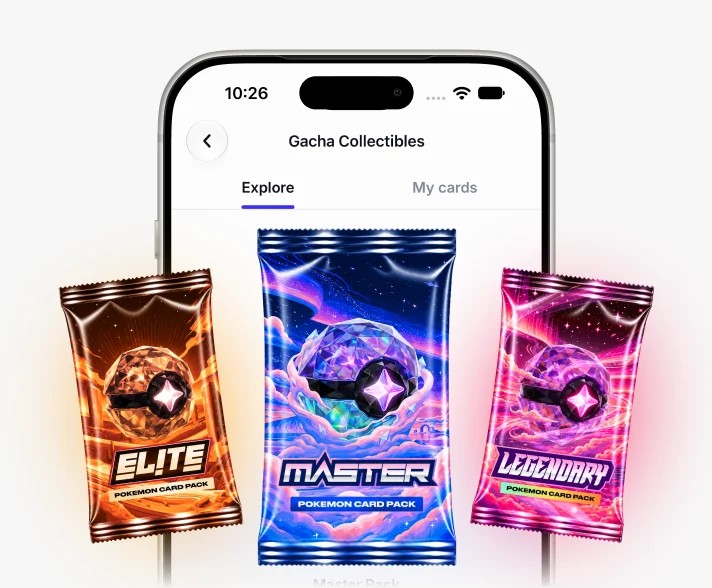
The pack opening habit has moved into an app that millions of people already keep on their phones for a very different reason. Trust Wallet announced Pokémon Gacha on November 25 and the packs are live in the latest version of the app, built by Collector Crypt and powered by real graded cards sitting in a vault. For collectors the draw is simple to understand. The reveal feels like opening a pack, the prize is a physical card with a grade, and the hard questions start right after the reveal, when the clock on selling it back starts running.
How the packs work
Trust Wallet says on its own product page that each pack reveals one real graded Pokémon card and that the card arrives in the wallet as an onchain collectible on Solana. Packs cost from $25 to $5,000 and higher priced packs draw from rarer and higher value cards. Before anyone pays, the app shows the price and the odds and the expected value and the possible cards for that pack. Payment is in USDC on Solana, the reveal takes three taps on the pack, and a pack left unopened opens on its own after 2 hours.
After the reveal the card sits under My cards and the buyer has two main choices. Keeping the card means keeping its token in a self custody wallet while the physical card stays in the vault. Selling it back means taking the offer shown in the app from Collector Crypt, and that offer window lasts 72 hours before it expires. A wider launch report carried by KuCoin adds that the first wave of onchain collectibles also covers basketball cards and watches, and that a seller can choose to sell a card and open another pack in the same flow.
What the Starter pack math shows
The cleanest early look at the numbers comes from Coindoo, which checked the public Starter pack data from Collector Crypt on the morning of November 25. Coindoo found an expected value of $27.51 for the $25 Starter pack and an instant sell back rate of 85 percent of insured value, which puts the average sell back return near $23.39. Coindoo also published the tier odds it read from that pack data, with common cards at 75 percent and uncommon cards at 20 percent and rare cards at 4 percent and epic cards at 1 percent, and it noted that only an uncommon pull or better returns the full $25 or more on an instant sell back. Those figures describe the Starter pack data Coindoo read that morning and pack odds and values can change, so the screen inside the app at the moment of buying is the version that counts.
That gap between insured value and cash back is the collector lesson in this launch. A pack can look ahead on paper while the typical instant exit still lands under the price paid, because most of the value in the pool sits in a small share of pulls. Anyone treating the buyback as the exit should do that math before the reveal and not after it, and anyone planning to take the physical card should read the delivery terms first. Coindoo reports that the Trust Wallet announcement does not cover shipping and that Collector Crypt terms let a holder request delivery while paying any shipping charges and withdrawal fees and sales tax that apply.
A launch giveaway with big spending gates
The launch campaign is called Gacha Grateful Gifting and it puts more than $100,000 in free Pokémon packs on the table. During the first 48 hours a raffle gives 100 users a free $25 pack each, with entry through opening a pack or completing a social quest on X. The bigger rewards sit behind spending milestones. Spending $2,500 on packs earns a free $25 pack for the first 1,000 qualifying users and spending $5,000 earns a free $50 pack for the first 2,000 qualifying users, with gift packs counting toward the totals and a cap of $100 in free packs per user. The free headline is real and so is the spend needed to reach most of it, and collectors should read the campaign as a heavy user promotion rather than a casual bonus.
The checks that matter before buying
Trust Wallet states plainly on its product page that it is not affiliated with or sponsored by or endorsed by The Pokémon Company and that the card a buyer receives is random and can be worth less than the pack price. Buyers must be 18 or older and availability varies by region, and the page says packs and buybacks and redemptions are provided by Collector Crypt and governed by its terms. None of that makes the launch a bad product. It does mean the trust question sits with a vault operator and a set of published odds rather than with a store shelf, and that is a different kind of pack buying than most Pokémon collectors are used to.
What to watch next
Watch whether the pack pools and their odds stay public and stable as volume grows, because published odds are the strongest part of this offer and they only build trust if they hold up over time. Watch also whether collectors choose the physical route and request delivery of their cards, since a vault product earns its reputation when cards leave the vault and arrive as described. And watch whether rival wallets copy the move quickly, because a launch report from BlockchainReporter notes that Binance Wallet introduced its own trading card pack opening on the same day through a different partner. Pack opening inside a wallet is now a race, and the winners will be decided by odds and exits and delivery, not by the reveal animation.
Article image from Trust Wallet, from its official Pokémon card packs page.